Sunday, May 31, 2009

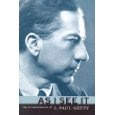
As I See It, by J. Paul Getty

I'm not a big fan of biographies, nor do I lust after pearls of wisdom from the world's billionaires. So I approached this book with trepidation. Still, it was a gift, and I needed a book for a flight, so I took it with me. The flight time passed effortlessly (although I didn't finish it until today); this is an excellent autobiography!

Mr. Getty clearly worked very hard for his success. His views on the impact of government tax and spend initiatives on the public good, written here in the early 1970s, appear, unfortunately, to be quite accurate.

Mr. Getty opened and closed his autobiography with a (mis-)quote from Abe Lincoln. My brief research fails to find an adequate citation for attribution to Lincoln; it seems that President Reagan may have first originated this to Lincoln. Possibly the actual author was William J. H. Boetcker, a minister who published this in 1942. My only complaint: certainly Getty of all people could afford a research librarian for his book!

Still though, the quote is wonderful and bears repeating here:

You cannot bring about prosperity by discouraging thrift.
You cannot help the wage-earner by pulling down the wage-payer.
You cannot further the Brotherhood of Man by encouraging class hatred.
You cannot help the poor by destroying the rich.
You cannot keep out of trouble by spending more than you earn.
You cannot build character and courage by taking away a man's initiative.
You cannot help men permanently by doing for them what they could and should do for themselves.

Forgive the political note: don't all of these, whether written in 1942 or in the 1800s, describe what the current Administration and Congress (like others before them) are most energetically attempting to do?

Monday, May 25, 2009

It's not what you sell, it's what you stand for, by Roy Spence


Mr. Spence's essential point is that a successful company needs to have a reason for business beyond just making money - that it needs to identify and delivery clear value to its clients, and to make that the purpose of the operation. The thesis is that the money will naturally follow.

This makes complete sense to me; I focus on my clients' success and believe that profitable revenue is inevitable as a result.

Mr. Spence runs the GSD&M advertising firm and illustrates his book with many examples from his own client roster. This is a light weight book but just because it is simple doesn't mean the message isn't important.

Sunday, May 17, 2009

Promises in Death, by J. D. Robb


This is an okay mystery, say for a long flight. But I was not pleasantly surprised by it because I expected a standard police mystery procedural. I was not expecting (a) it to be set in the future with tinges of science fiction, nor (b) it to have intermittent intrusions of romance novel writing.

Either I got worn down or things got much worse in the last third of the book, where my interest flagged and it became a slog to get to the so-so ending.

Tuesday, May 12, 2009

The Girl with the Dragon Tattoo, by Stieg Larsson


This is simply outstanding; one of the best books I've read this year.

A journalist is discredited. Why? He is hired to address a 40 year old mystery. He solves it, and resolves his journalistic credibility too. Every character is interesting, the plot moves forward without ever stumbling.

Monday, May 4, 2009

Supreme Courtship, by Christopher Buckley


Unlike the previous book I read, this one really is a comedy, and a fine one - like all Buckley's novels. I complain that the ending felt rushed; twenty more pages would have been appropriate.

The Year of Living Biblically, by A. J. Jacobs


The sub-title is, "One Man's Humble Quest to Follow the Bible as Literally as Possible." This is a fabulous book. It is listed in the comedy genre but the only explanation I can see for that is the publisher imagining better sales there than in the theology section of the book store. I found nothing comedic and many things thought provoking.

The best part of the book is the clarity about the dangers of selective literal interpretation of the Bible. Even the most devout fundamentalist Christians and fundamentalist Hasidic Jews just can't do it - even they have to decide that some lines are metaphor.

For the more moderate who choose to pick and choose lines from the bible to defend their hostility towards homosexuality or to defend their desire to over-rule a woman's right to choose how to handle her own body, there is ample evidence that this is a fool hardy approach.

There are more examples than I can count (read the book and you'll just set yourself up for a time-wasting scavenger hunt through a Bible concordance to find yet more examples of your own). (Oh, maybe that's just me.) Here are a couple from Jacobs' book:

"...kick women out of church for saying hello ('the women should keep silence in the churches. For they are not permitted to speak...' -- 1 Corinthians 14:34) and boot out men for talking about the 'Tennessee Titans' [football] ('make no mention of th enames of other gods...' -- Exodus 23:13).

Friday, April 17, 2009

The White Tiger, by Aravind Adiga

The Man Booker Prize has been a reliable predictor of novels; they're always excellent. This is no exception.

White Tiger puts an "modern day India / technology changes the nation / stark distinctions of rich and poor / caste system" spin on the ages old rags to riches story line. In brief: our hero goes from poor, uneducated servant class to modern day entrepreneur, but has to kill to do so. (Don't fear, I haven't given away anything to which the author would object.)

This well written book captured my interest. Probably as Westerners we should be cautious to not try to read too much into this as a depiction of India, but rather enjoy it as the novel it is. Think of it as in the Slumdog Millionaire genre if you'd like.

Thursday, April 16, 2009

Night and Day, by Robert B. Parker

This short book is in the Jesse Stone series (i.e., not Parker's Spencer mysteries). I was flying and wanted a distraction: this was perfect. Good thing I always carry more than one book though; this novel reads fast.

What more might I say: if you know Parker's writing, particularly in the Stone books, you already know the deal. It was just another light entry in that collection. In other words, you wouldn't waste your money on acid free paper for this stuff. But a great little mystery.

Tuesday, April 14, 2009

The Brief Wondrous Life of Oscar Wao, by Junot Diaz

Okay, this was an entertaining novel. The big surprise is that it won a Pulitzer Prize; wow - the other submissions must have been really poor. Not that this is bad. But I never felt I really got to know the main character, Oscar, in any deep fashion. The style is unusual for a modern day novel, but perhaps is more typical of Dominican literature. I'd say, B+.

Sunday, April 12, 2009

Understanding Wood Finishing, by Bob Flexner

This is a great reference; it demystified about 85% of the subject. I'm not sure if I should blame Mr. Flexner for not getting me to 100%: perhaps I just need to re-read the book a couple times more.

Still, it made some things quite clear, and not clear: tung oil might really be called varnish, and it often might not even have any tung oil in it. There, that's helpful, right?