 Coben continues to be a reliable source of interesting, complicated, well written action novels. This is his latest, featuring characters that dedicated readers know and care about. Yes, it is far-fetched. So what; it is great fun.
Saturday, June 27, 2009
Long Lost, by Harlan Coben
Coben continues to be a reliable source of interesting, complicated, well written action novels. This is his latest, featuring characters that dedicated readers know and care about. Yes, it is far-fetched. So what; it is great fun.


The Workbench, by Lon Schleining
 This is a lovely, and essential, book for anyone contemplating building their own workbench - which is to say, for virtually any amateur woodworker.
It is very different than Schwarz's book - more of a broad survey of types of benches. The photos are fabulous. More details, especially about some of the unusual bench approaches, would have been welcome.
Still, one I'll reference back to many times as a (continuously) plan my own custom workbench.
Friday, June 26, 2009
I Will Teach You to be Rich, by Ramit Sethi
 I read this book, having learned of it through a blog that I follow, to see if it is worth recommending to my kids. The advice is sound, reasonable, and delivered in a pleasant and conversational tone. The intended audience is clearly 20-somethings.
My only serious complaint about is that in spite of the youthful target demographic, the financial examples use numbers like $100,000 annual salary -- I expect this is hardly the typical income for most readers.
So the verdict: yes, I do recommend it. Don't expect any breakthrough thinking though - just the kind of nagging advice I give, in a more youthful and objective tone:
- There's nothing wrong with frugality; just decide what your priority expense is and - if you can afford it after paying your bills and saving some money (i.e., via overall frugality) - then go for it
- Pay off credit cards in full each month
- Minimize debt to essentials (e.g., house, car), and make sure to get the best rate
- Pay yourself first - i.e., save regularly and automatic payroll deductions to a separate savings account make that easy to do
- Take advantage of 401k plans if there's any employer matching; use IRAs, especially Roth IRAs if your income doesn't preclude their use
- Once you have a year's pay in the bank (Ramit thinks three month's pay is sufficient; by the way, he hates Wells Fargo, and he really likes internet banks), then invest; index funds can be very low overhead (e.g., via Vanguard) and require little thought, and dollar -cost -averaging (invest the same amount month-in and month-out) works well for them
Thursday, June 25, 2009
Sea of Poppies, by Amitav Ghosh
 This is a masterpiece, but I recommend it with some cautions. The setting is India, 1838, the opium trade to China is at risk. But this is only peripherally about those things; it is about individuals, or more correctly about individuals' transformations.
Note to perspective readers: the dialogue was peppered with Bengali, Hindi, and British 1800's sailor's pidgin. There's a purported glossary at the back of the book which I found painful. I did just fine following things without using the glossary, but decoding some of the dialogue might bug some folks.
Monday, June 22, 2009
Gone Tomorrow, by Lee Child
 You may say it is formulaic. I like formulaic. And a bit violent. And predictable. It is all that, and still good fun in a fast and reliable read.
Thursday, June 4, 2009
The Eighth Day, by Tom Avitable
This excellent suspense / action novel is oddly unavailable from Amazon, but you can get it at Barnes & Noble, or your local library.
Monday, June 1, 2009

Sunday, May 31, 2009
As I See It, by J. Paul Getty
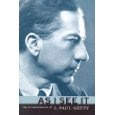 I'm not a big fan of biographies, nor do I lust after pearls of wisdom from the world's billionaires. So I approached this book with trepidation. Still, it was a gift, and I needed a book for a flight, so I took it with me. The flight time passed effortlessly (although I didn't finish it until today); this is an excellent autobiography!
Mr. Getty clearly worked very hard for his success. His views on the impact of government tax and spend initiatives on the public good, written here in the early 1970s, appear, unfortunately, to be quite accurate.
Mr. Getty opened and closed his autobiography with a (mis-)quote from Abe Lincoln. My brief research fails to find an adequate citation for attribution to Lincoln; it seems that President Reagan may have first originated this to Lincoln. Possibly the actual author was William J. H. Boetcker, a minister who published this in 1942. My only complaint: certainly Getty of all people could afford a research librarian for his book!
Still though, the quote is wonderful and bears repeating here:
You cannot bring about prosperity by discouraging thrift.
You cannot help the wage-earner by pulling down the wage-payer.
You cannot further the Brotherhood of Man by encouraging class hatred.
You cannot help the poor by destroying the rich.
You cannot keep out of trouble by spending more than you earn.
You cannot build character and courage by taking away a man's initiative.
You cannot help men permanently by doing for them what they could and should do for themselves.
Forgive the political note: don't all of these, whether written in 1942 or in the 1800s, describe what the current Administration and Congress (like others before them) are most energetically attempting to do?
Monday, May 25, 2009
It's not what you sell, it's what you stand for, by Roy Spence

Mr. Spence's essential point is that a successful company needs to have a reason for business beyond just making money - that it needs to identify and delivery clear value to its clients, and to make that the purpose of the operation. The thesis is that the money will naturally follow.
This makes complete sense to me; I focus on my clients' success and believe that profitable revenue is inevitable as a result.
Mr. Spence runs the GSD&M advertising firm and illustrates his book with many examples from his own client roster. This is a light weight book but just because it is simple doesn't mean the message isn't important.
Sunday, May 17, 2009
Promises in Death, by J. D. Robb

This is an okay mystery, say for a long flight. But I was not pleasantly surprised by it because I expected a standard police mystery procedural. I was not expecting (a) it to be set in the future with tinges of science fiction, nor (b) it to have intermittent intrusions of romance novel writing.
Either I got worn down or things got much worse in the last third of the book, where my interest flagged and it became a slog to get to the so-so ending.
Subscribe to:
Posts (Atom)